The Current Farce of Lok Sabha Attendance

The 17th Lok Sabha came into effect during the Indian General Elections of 2019. Although the materialization of the latest Lok Sabha witnessed some positive firsts in the form of highest elected women MPs ever, certain problematic traditions continue to exist. This includes having a considerable percentage of MPs (nearly 43%) with criminal charges against them. However, there is another aspect regarding the core functioning of parliamentary sessions that requires an overhaul; the attendance percentage of the elected MPs.

The manner in which the attendance of the MPs is recorded is still fairly archaic as they are required to sign in a register outside the Lok Sabha and Rajya Sabha chambers to mark their presence. This clearly isn’t an efficient mechanism and makes room for them to bypass the regulations. For starters, it is quite possible for an MP to leave once they are done signing. They might not even attend the proceedings. Moreover, this sign in the register is the only criteria for them to receive their daily allowance.

However, even if we keep aside the flaws in the system and assume the attendance percentages at their face value, the picture isn’t entirely impeccable. Following are the attendance statistics of the 17th Lok Sabha for namely two sessions; Session 1 (Monsoon Session) spanning over June, July and August and Session 2 (Winter Session) for the months of November and December, 2019.

https://infogram.com/report-1h8j4x007wj84mv?live

For Session 1, the average attendance recorded was 81.16% while for Session 2 it was at 75.04%. Now, at first glance this might seem sufficiently high but if we look at the numbers more closely, the rose-tinted glasses start coming off. For instance, in Session 1 an average of 102 MPs skipped the proceedings. For the second session, the average number of absentees comes around 135. This means that over 100 MPs have not been a part of these sessions and that’s no small number.

 A population of over 1.3 billion gets a representation in the form of just 543 elected members in the Lok Sabha. They in turn get a chance to bring forth the woes of the common people as well as influence major policy decisions that could impact their lives and take the nation forward. A significant number of MPs not showing up for these sessions, further brings down the number that represents the voices of the general public. Thus, this reflects on the unsatisfactory share of say that the citizenry of the largest democracy in the world has in the law-making procedure. What’s even more surprising is that two extremely critical bills were passed during the Winter session; The Citizenship (Amendment) Bill and the Personal Data Protection Bill. This is the same session that saw a significant drop in the average attendance from the previous one. Members of Parliament should remember that this representational opportunity that comes with responsibility, privilege and the hopes of crores of people; shouldn’t be taken lightly.

If we take a glance at the month-wise attendance statistics of both the sessions, there is a steady decline as the year comes to an end except for December, where it witnesses a relative rise in comparison to November; from 73.43% to 76.75%. This could be deduced as a fact that MPs tend to lose interest in the parliamentary proceedings over time. Although there aren’t any specific reasons that could be attributed to this pattern, it could be a potential area to look into and as well as address with possible solutions in the future.

By now it is quite evident that there is a need for some changes to be brought in; not just to make the absentees more accountable but also in the way attendance is recorded. At present, a member stands to lose his/her seat if they are absent from the proceedings for a continuous period of 60 days without permission, as per Article 101 of the Indian Constitution. However, this clearly isn’t enough. In order to make the attendance requirement more enforceable, there should be some penalties in place. This could include revoking their right to contest in the next elections if they fail to meet the desired cut.

Interestingly, the Indian constitution exempts The Speaker, Deputy Speaker, Prime Minister and the other Ministers from signing in the attendance register to mark their presence. At the very least some regulation should be levied on the attendance requirement of the Prime Minister and other cabinet ministers. This reflects badly on the absolution of responsibility in terms of House appearance that’s working in a hierarchal fashion. The ministers, including the PM, have as much duty as the rest of them to meet a certain requirement, if not more. Moreover, the presence of the PM does serve as an incentive for the MPs to not only show up but also demonstrate more involvement in parliamentary debates. According to an online survey carried out by LocalCircles, a citizen-centered social media platform, 61% of the 7899 participants believe that Narendra Modi’s increased presence during the sessions would serve as a boost to the productivity of the Houses (Dutta, 2018).

However, it is not just enough to incentivize the MPs to attend the sessions. As mentioned before, the entire process of recording attendance needs a revamp. The most obvious way to start off would be to digitize the whole procedure. Instead of physical signatures, a biometric punching system or something along those lines should be installed. This mechanism should also ensure that the members attend a minimum number of hours for it to be counted as one day’s attendance. This would prevent the scenario wherein someone comes over just to meet the attendance formality.

At the end of the day, one must remember that achieving a rise in attendance signatures or even their actual presence isn’t enough. What’s more important is that these MPs actively participate in the discussions, debates and exchange of ideas within the parliamentary sessions. An adequate participation doesn’t simply end at sitting and listening in, but also includes voicing your concerns that might impact the final decision making, and thus the lives of this vibrant democracy.

References

Data Source: http://164.100.47.194/Loksabha/Members/MemberAttendance.aspx
https://scroll.in/article/848512/parliament-attendance-on-most-days-is-70-so-what-explains-the-empty-benches-during-sessions

https://www.indiatoday.in/india/story/nation-wants-to-see-more-of-pm-modi-in-parliament-1288793-2018-07-18

https://www.google.co.in/amp/s/amp.scroll.in/article/849434/arrest-debate-vote-count-how-us-congress-and-other-parliaments-ensure-presence-of-their-members

https://www.google.co.in/amp/s/www.indiatoday.in/amp/india/story/parliament-s-winter-session-to-take-up-citizenship-bill-34-others-1619709-2019-11-16

https://www.google.co.in/amp/s/theprint.in/india/governance/just-6-mps-boast-of-100-attendance-in-16th-lok-sabha-four-from-bjp-none-from-congress/193057/%3famp

https://www.google.co.in/amp/s/www.indiatoday.in/amp/india/story/parliament-lok-sabha-rajya-live-updates-citizenship-bill-amit-shah-personal-data-protection-bill-ravi-shankar-prasad-1627232-2019-12-11

https://www.google.co.in/amp/s/www.indiatoday.in/amp/india/story/venkaiah-naidu-pulls-up-mps-for-low-attendance-in-parliamentary-panels-1625437-2019-12-05

Debunking the misconceptions around CAA-NRC

Citizenship amendment bill which was introduced in parliament on the 9th of December, called for a lot on contention throughout the country and student protests broke out amassing concerns regarding the same. The objective of the act is to redefine the definition of an illegal immigrant and take suitable measures to stop them from coming into the country. Under the act, fast track citizenship will be granted to Hindu, Sikh, Parsi, Christian and Buddhist immigrants who have been living undocumented in the Indian subcontinent. Muslims have been exempted from the same. Appeals to the supreme court went unheard and it denied any help until the violent protests in various parts of the country stop.

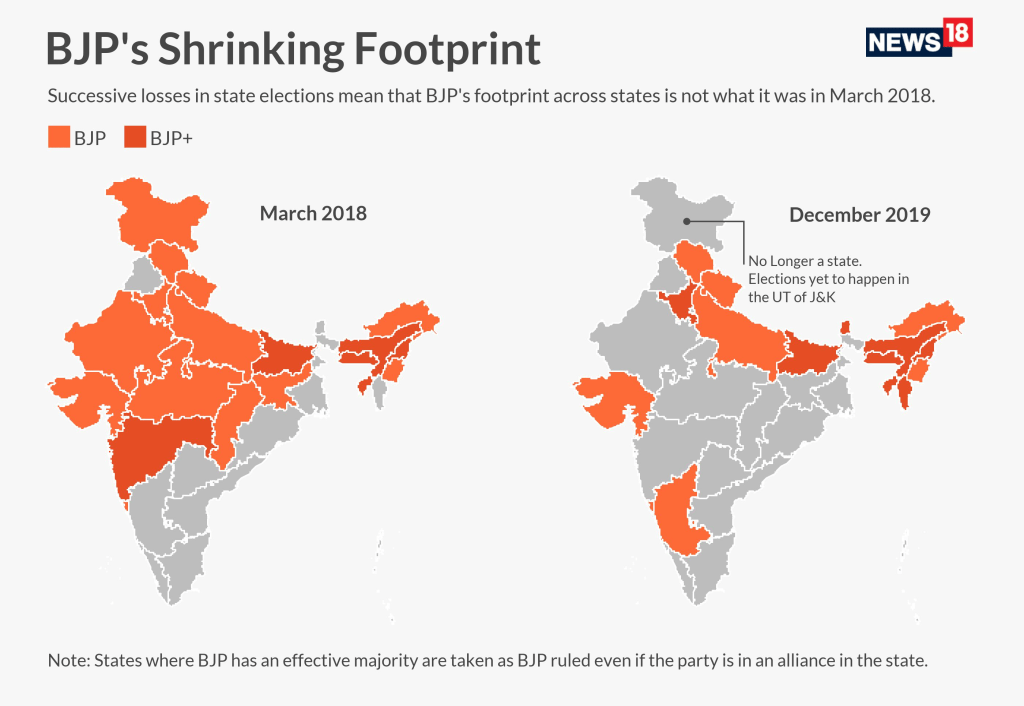
Anti CAA protestors have been fighting for many causes but the one that stands out in all of them remains, the indiscriminatory nature of the act towards the Muslims. The ruling party puts behind the unintelligent logic that other minorities have to run away from other Islam dominated countries and Hindus only have to come back to. Home minister Amit Shah blamed the entire fiasco on congress saying that CAA would never come in the scene if congress never agreed for the partition which was based on religion. When it comes to the younger generation showing its political inclinations, we see none. The BJP and the opposition have rocked the student cradles aggressively ever since Indira Gandhi came into power and this neutral stand has led to a very drastic downfall in their regime. Even though the party came into power for the second time last year in 2019, a social cry for a reformative movement has been called for by lakhs and lakhs of students around the country. Students are pegged as ‘bacche log’ (children) as stated by the Home Minister, Amit Shah. BJP has thus been experiencing a downfall in its regime that started not right now, but years ago when the masses learned that unemployment has been its highest in the last 45 years, poverty is ever-increasing and foreign investment has been on the decline. With the introduction of the CAA (Citizen Amendment Act), fuel has been added to the fire and BJP is receiving its most brutal backlash.

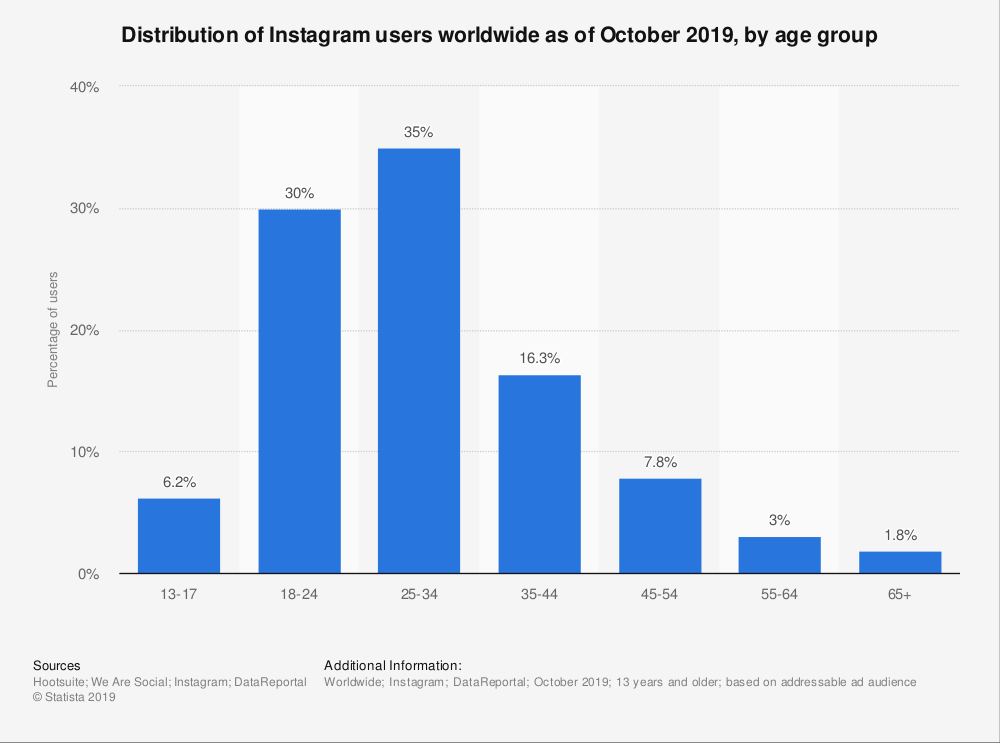
Social media sites like Instagram and Twitter have become primary news sources for students and people aged 15-25 because of the contamination and stagnation of news organizations like Republic TV and NDTV. Channels like Zee News, Aaj Tak, News18 and India Today have been bought by the ruling party and have poisoned the very ethics and basis of good journalism. Therefore, the student population and the youngsters have shifted platforms from the above to neutral (or leftist platforms) like The Quint, ScoopWhoop and BuzzFeed. The news on Instagram however is a classic example of Community Journalism where millions and millions of people contribute their sources and opinions on a large scale. The information shared is first-hand, researched, provided with reliable sources and cited properly.

In Assam, one of the essential criteria was that the names of candidate’s relatives ought to either be in the main NRC arranged in 1951 or in the appointive moves up to March 24, 1971. Other than that, candidates likewise had the choice to introduce archives, for example, displaced person enrollment testament, birth declaration, LIC approach, land and occupancy records, citizenship authentication, identification, government provided permit or endorsement, bank/post office accounts, perpetual private declaration, government business endorsement, instructive testament and court records.

“Exclusion of an individual’s name in the NRC doesn’t without anyone else sum to him/her being pronounced an outsider,” govt has said. Such people will have the choice to introduce their case before outsiders’ councils. In the event that one loses the case in the council, the individual can move the high court and, at that point, the Supreme Court. On account of Assam, the state government has explained it won’t keep any person until he/she is pronounced an outsider by the outsiders’ court.

The above chart analyses the age groups which are active with their usage and those groups that are evidently not. We come to a conclusion that states that the age-groups of 18-24 and 25-34 are the most frequent users and has turned Instagram into a platform for students and young adults whose ideologies are poles apart from those of our parents, grandparents, the previous generation. A stark difference in the ideological propagation on platforms like Instagram and Facebook can be seen. On Facebook, the user age-group that’s seen to be active are men and women over the ages of 35-40 having an opinion that is pro-CAA and pro-BJP. Therefore, Facebook has been relegated for those who are pro-CAA (because of the play of a specific age group) and Instagram has been deemed as one for the students who are anti-CAA and anti-BJP. The legislature has set up NRC Seva Kendras in each locale of Assam, which help individuals in scanning for Legacy Data, giving of Legacy Data Code, and in receipt of NRC Application structures.

https://infogram.com/column-chart-1hxj48ggn7md2vg?live

https://infogram.com/step-by-step-charts-1h0n25qq9mr92pe?live

The 1951 NRC in Assam:

NRC for Indian residents in Assam was first made in 1951. Manipur and Tripura were additionally conceded authorization to make their very own NRCs, yet it never emerged. The purpose for the move was to distinguish Indian residents in Assam in the midst of “unabated” relocation from East Pakistan (presently Bangladesh). The rundown involved the individuals who lived in India on January 26, 1950, or were conceived in India or had guardians who were conceived in India or had been living in India for at any rate five years before the January 26, 1950 cut-off.

CONCLUSION

Incidentally enough, there isn’t sufficient information to either bolster or contradict this misgiving. According to the census survey of 2011, Assam has more than 90 lakh Bengali speakers against 1.5 crore Assamese speakers. The number has expanded from about 1.3 crore Assamese and 73 lakh Bengalis in the 2001 census. The progressive statistics reports have not determined precisely what number of among these Bengalis are Hindus and what number are Muslims, which makes it hard to lead an unbiased investigation about the careful demographic example of this supposed migration.

Source Links:

https://www.business-standard.com/about/what-is-nrc

https://www.firstpost.com/india/citizenship-amendment-bill-bjp-chasing-ghosts-in-assam-as-census-data-shows-number-of-hindu-immigrants-couldve-been-exaggerated-5640511.html

https://economictimes.indiatimes.com/news/politics-and-nation/all-you-need-to-know-about-proposed-pan-india-nrc/articleshow/72671119.cms

https://www.youthkiawaaz.com/2019/01/bengali-hindus-in-assam-the-nowhere-people/